Patent team from the Geological Survey of Slovenia and the National Institute of Biology.
Project Team
The GWMicroPlast project brings together experts in hydrogeology, geochemistry, biology, and environmental analysis. The research team combines the development of innovative sampling methodologies, field investigations, laboratory analyses, and studies of microplastic transport processes in the subsurface environment.
Throughout the various phases of the research, the project brought together researchers from GeoZS, the National Institute of Biology (NIB), and the Water Research Institute of the Republic of Slovenia (IzVRS). The partners and participating researchers worked closely together to develop sampling methodologies, monitor microplastics in groundwater, and interpret the results.
Innovative Microplastic Sampling Solution
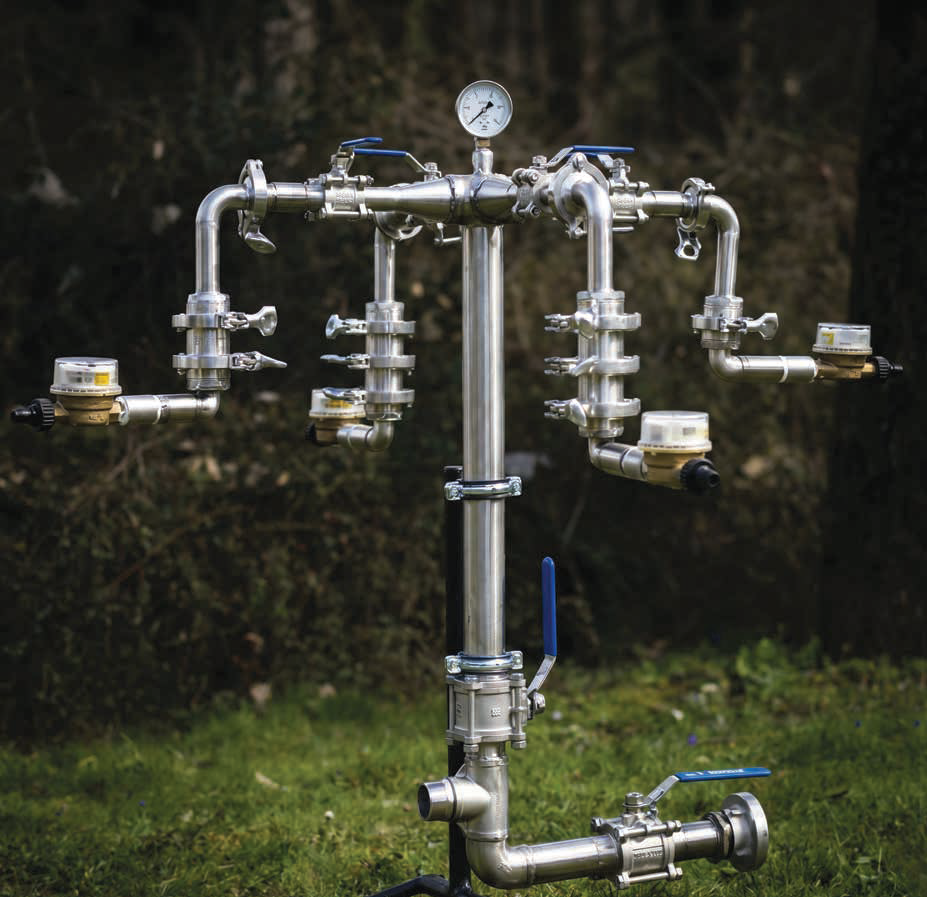
One of the key achievements of the project is the development of a closed-system filtration device for large-volume groundwater sampling, enabling microplastic sampling while minimizing contamination risks. The system is based on cascade filtration and allows reliable determination of microplastics even at very low concentrations in groundwater. The developed methodology represents an important contribution toward establishing robust and reliable monitoring approaches for microplastics in groundwater resources.
The innovative solution was further validated through the granting of patent SI26579A for a groundwater microplastic sampling system. The patented technology enables on-site filtration of large groundwater volumes and represents an important step in transferring scientific innovation into practical application.
International Recognition of the Methodology
The methodology developed was presented in a journal Journal of Visualized Experiments (JoVE) through the publication Sampling and Identification of Microplastics in Groundwater. The article provides a detailed protocol for groundwater microplastic sampling and analysis, making the methodology accessible to the international scientific community.
Recognition for Innovation
The significance of this advanced technology has also been recognized by the scientific community, as the project team received this year the Marko Vincenc Lipold plaque.
Patented groundwater microplastic sampling system (SI26579A), developed within the GWMicroPlast project.
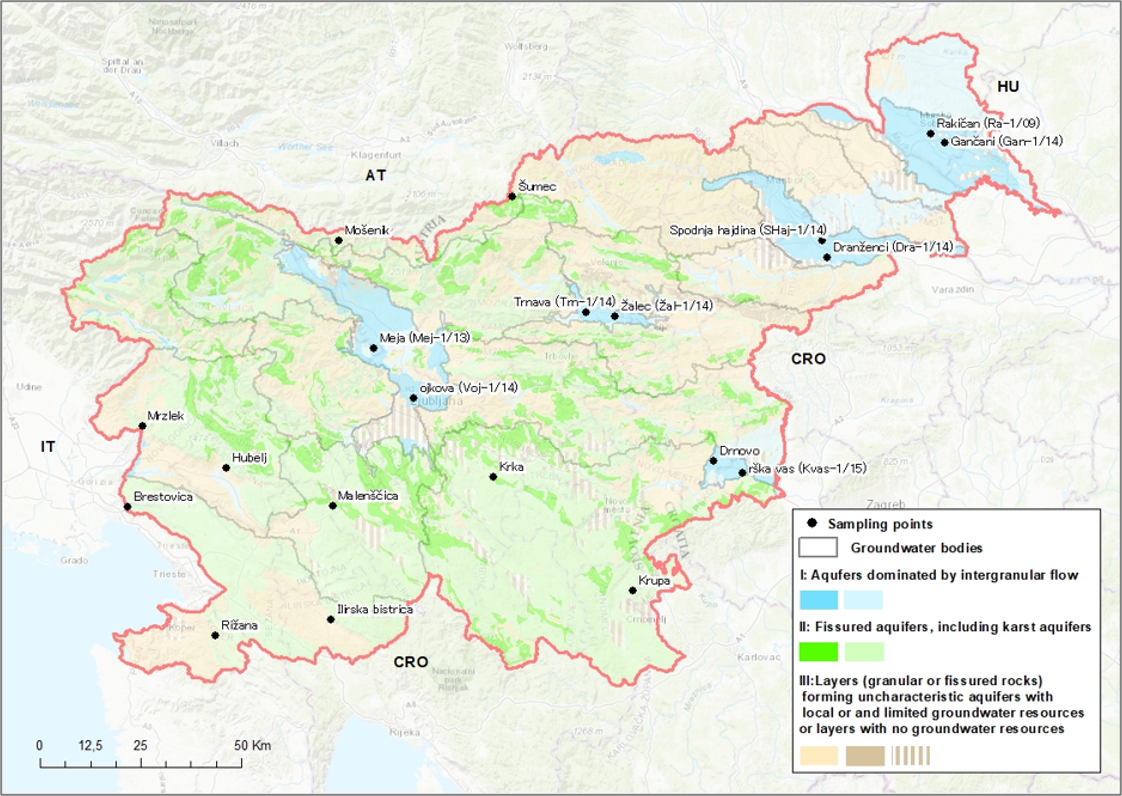
Microplastic monitoring covered 20 representative locations in alluvial, karst, and fractured aquifers across Slovenia.
First Systematic Assessment of Microplastics in Slovenian Groundwater Resources
Within the GWMicroPlast project, we carried out the first large-scale and systematically designed monitoring campaign of microplastics in Slovenian groundwater resources. The monitoring network included 20 representative locations, comprising 10 alluvial aquifers and 10 karst and fractured-rock aquifers, which represent the most important sources of drinking water in Slovenia. Sampling was performed during two monitoring campaigns. At each site, three samples were collected, with 1 m³ of groundwater filtered per sample, resulting in a total filtered volume of 3 m³ per location. The patented groundwater sampling system developed within the project was used throughout the campaign.
Initial results confirmed the presence of microplastics in different types of Slovenian aquifers. Fragments and fibres were the most frequently detected particles, while polymer identification revealed polyethylene (PE), polypropylene (PP), polyethylene terephthalate (PET), and polyamide (PA), among others. The results indicate that hydrogeological characteristics influence the occurrence, properties, and transport of microplastics in groundwater.
This study provides an important foundation for future groundwater microplastic monitoring programmes and contributes to a better understanding of microplastic occurrence in groundwater environments. Detailed analyses and interpretation of collected samples are still ongoing and are expected to provide further insights into the origin, transport, and fate of microplastics in the subsurface.
Field Laboratory for Investigating Microplastic Transport
Understanding how microplastics reach groundwater requires more than simply identifying their presence in aquifers. A key question is how particles move through the unsaturated zone, which forms the connection between the land surface and groundwater and plays a crucial role in the transport and retention of contaminants.
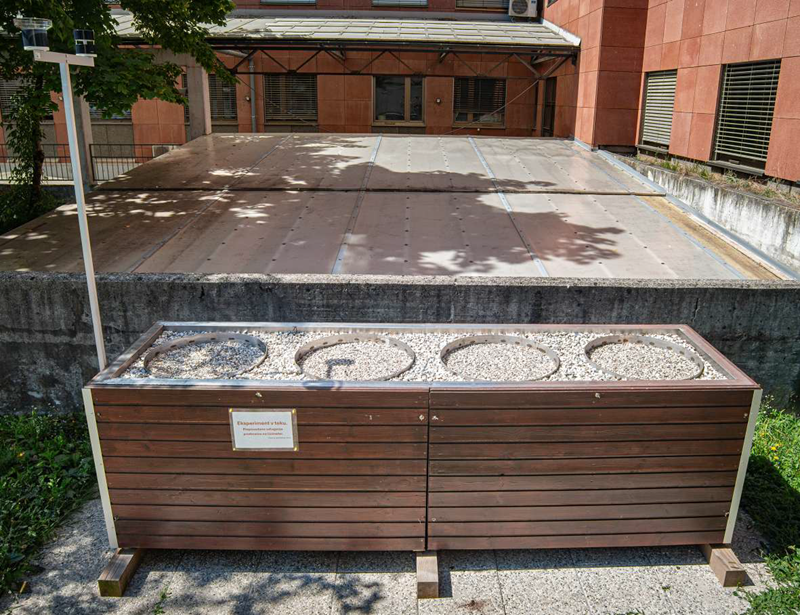
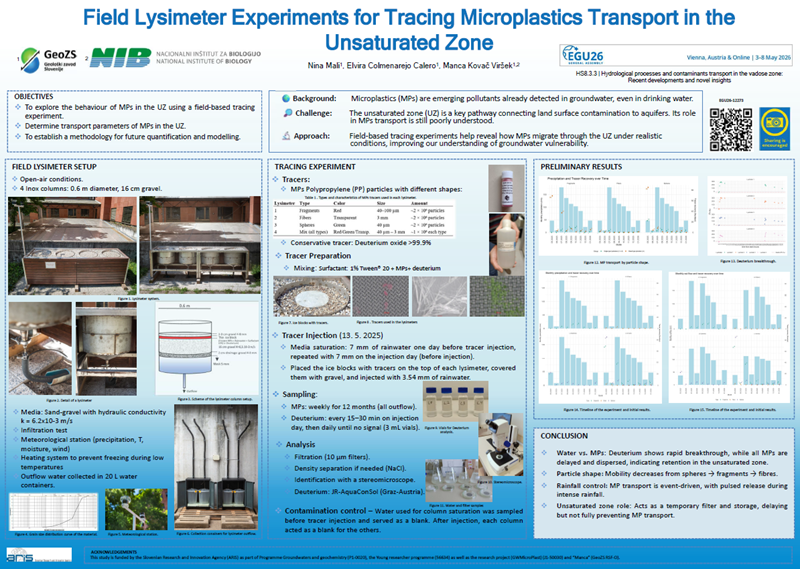
Within the project, we established an outdoor lysimeter facility that enables the investigation of microplastic transport under conditions much closer to the natural environment than conventional laboratory experiments. The facility consists of four lysimeters filled with sandy-gravel material, a drainage-water collection system, and a meteorological station for monitoring weather conditions. This design enables the assessment of rainfall-driven transport processes and other environmental controls on microplastic migration through the unsaturated zone.
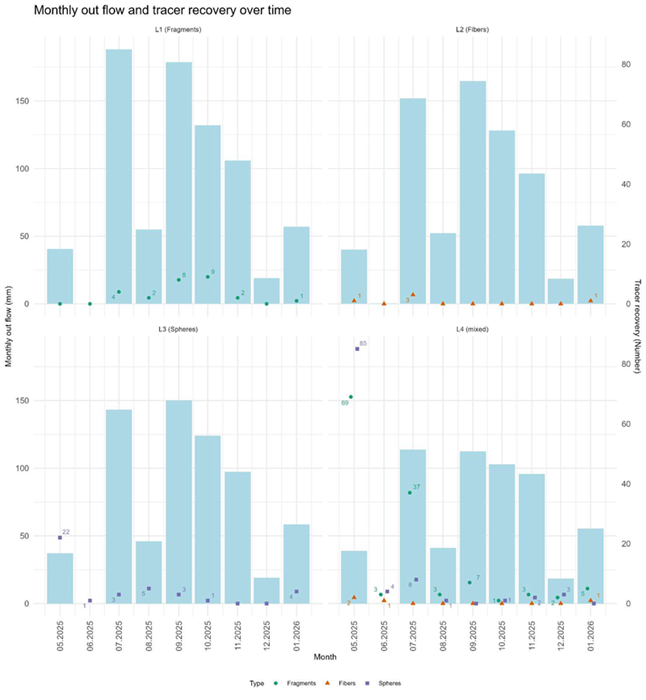
The experiment utilizes different types of microplastic particles, including fibres, fragments, and beads, together with deuterated water as a conservative tracer. This approach allows direct comparison between water transport and particle transport, improving our understanding of microplastic retention and migration processes in porous media.
Initial results indicate that microplastics do not move through the unsaturated zone in the same manner as water. Particle mobility depends on particle shape and rainfall events, while retention within sediments can significantly delay transport. These findings provide an important basis for future transport modelling and groundwater vulnerability assessments. Further monitoring and data analysis are currently ongoing.
Experimental lysimeter facility for investigating microplastic transport through the unsaturated zone under natural weather conditions.
Initial results indicate differences between water and microplastic transport through the unsaturated zone.
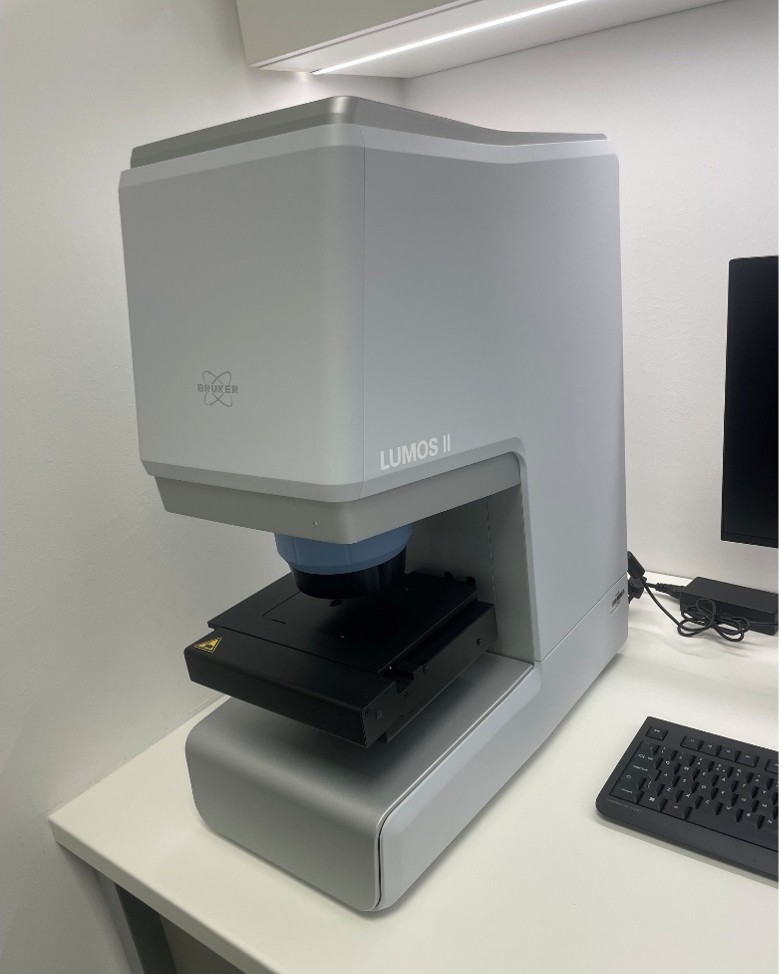
The Bruker LUMOS II FTIR microscope, acquired in 2026 with ARIS support, enables advanced identification and characterization of microplastic particles in environmental samples.
Advanced Analytical Methods
Microplastic research requires accurate identification of particles and determination of their chemical composition. The project employed several advanced analytical techniques, including:
FTIR spectroscopy,
micro-FTIR microscopy,
Raman spectroscopy,
SEM-EDS electron microscopy,
stereomicroscopy and digital microscopy.
The combination of these methods enables the determination of particle morphology, size distribution, and polymer composition, ensuring high-quality data for groundwater microplastic research.
An important project achievement was also the upgrade of the research infrastructure. In 2026, a new FTIR microscope was acquired with support from ARIS, enabling faster and more accurate identification of microplastic particles in environmental samples. At the same time, a dedicated laboratory for microplastic research was established and equipped, forming the core infrastructure for microplastic studies at the Geological Survey of Slovenia.
Scientific Achievements and Dissemination of Results
Project results have been published in international scientific journals and presented at numerous national and international conferences in the fields of hydrogeology, geochemistry, microplastic research, and water-resource protection. Particular emphasis was placed on disseminating advances in groundwater microplastic monitoring, transport-process investigations, and methodological development.
Project results were presented at major international scientific conferences, including the EGU General Assembly, the Congress of the International Association of Hydrogeologists (IAH), the SEGH Conference on Environmental Geochemistry and Health, and the Slovenian Water Congress. Presentations addressed methodological developments, groundwater monitoring results, and experimental studies of microplastic transport through the unsaturated zone. A complete list of conference contributions is available in the project bibliography (SICRIS).
Innovations and Awards
Patent SI26579A for a groundwater microplastic sampling system.
The Marko Vincenc Lipold Plaque for outstanding achievements in the field of geology and innovation.
The methodology developed presented in the Journal of Visualized Experiments (JoVE).
Poster presented at the 2026 EGU General Assembly in Vienna.